

Is DBS’s Fantastic Profitability Due to Its CEO’s Ability or Its Dominant Share of Its (Protected) Home Market and Its Gouging of Singaporean Consumers?

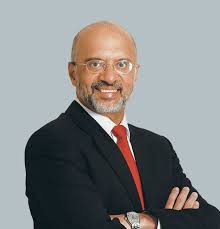
Today DBS announced that its net profit for 2023 rose 26% to $10.3 billion and its return on equity rose to 18%. CEO Piyush Gupta and DBS management awarded themselves a pat on the back even though Gupta took a 30% pay cut to his variable compensation to reflect the series of severe digital disruptions during the year The rest of the management team took a 21% cut despite the record profits. However it was not clear from the press release whether that would still leave Gupta earning as much as or more than last year, when he earned $16 million.
DBS’s performance is particularly impressive given the small size of its home market. This year it made more than three of the UK’s largest banks, NatWest, Lloyds and Barclays, despite having a much smaller domestic market of 6 million compared to the UK’s nearly 70 million population. Its return on equity is higher than that of J P Morgan which is the top US bank. DBS/POSB must surely be one of the world’s most profitable banks.
How much of that is due to value-added by its management team and how much of it is pure monopoly profit? Given that DBS/POSB has over 50% of savings deposits and 29% of housing loans, its ability to extract monopoly profits is very high. It has over 5 million customers in Singapore from which it derives nearly 65% of its profit. In addition it has only 2 competitors, UOB and OCBC, who have every incentive not to compete on price with the market leader. Both of these are also extremely profitable.
It doesn’t serve the interests of Singaporean consumers to have such a concentrated banking market since no doubt they pay higher margins on loans and receive less on savings deposits than they would if there was more competition. But of course it suits the Singapore Government, since through Temasek it owns approximately 29%, maybe more, of DBS (and would no doubt own more if it was not bound by the need to make a mandatory offer to all the other shareholders if it went above the 30% threshold). As a significant shareholder, Temasek’s share of DBS’s profits are included in its results and ultimately in the value of the reserves.
DBS’s excess profits are just one more way in which, indirectly, the PAP extract a surplus from Singaporeans through its ownership (or majority ownership) of large areas of the domestic economy, including telecoms, utilities and transport. This surplus then disappears into the reserves where only a fraction, if any, of the returns are spent on investing in Singaporeans. I have written about this in my blog on several occasions as far back as 2011. Since the links to my blog will not work due to Government efforts to censor me and prevent Singaporeans from learning the truth, I suggest you look up “Another Round of Monopoly Anyone” or go directly to my blog at kenjeyaretnam.com and search for it.
The level of concentration and whether Singaporeans are getting a raw deal in banking should be one of the areas examined by the Competition and Consumer Commission of Singapore (CCCS). Obviously that’s not going to happen while the PAP are still in government so we have to wait till that changes. One obvious suggestion would be to consider splitting POSB from DBS, which should not have been allowed to buy it in the first place. Another question should be whether CCCS should have have allowed UOB to buy OUB.
Singaporeans might want to consider whether the current CEO, Piyush Gupta, is worth the compensation he’s paid, which is far more than the CEOs of Natwest, Barclays and Lloyds in the UK and also than the CEO of HSBC, which is far larger in terms of assets. Is DBS’s incredible profitability the result of his unique skills and management abilities or is it due to DBS’s close to monopoly position in Singapore’s protected domestic banking market?

answer back
 | Immigration and Nati… on An Imaginary Climate of F… |
 | Good Person on Correction Notice: This Post C… |
| security of S’… on Correction Notice: This Post C… | |
 | Dear Lawrence Wong,… on Should Singaporeans Be Loving… |
 | derekgoh05 on Is MAS’s Promise to Inve… |
 | Kurusamy on It’s Heartbreaking That… |
 | Chin Tulan on As the Supply of BTO Flats Ram… |
 | abao on As the Supply of BTO Flats Ram… |
 | Robert Shulman on Shanmugam: A Whiter Shade of… |
| Ramli Kay on While State Media Report on Ho… |

 The Ricebowl Singapore (TRS)
DBS has done well with its banking services. For me, it provides me with great services, superior online banking (vs UOB or OCBC). Not sure why you wrote this article with just broad brush argument without factual basis. Its no fault of DBS being the largest bank but I think the CEO leadership is very focused on service quality both online and physical branches and tempered with the need to manage costs.
LikeLike