

The MRT Disruptions Are Yet Another Dent in the PAP’s Reputation for Competence
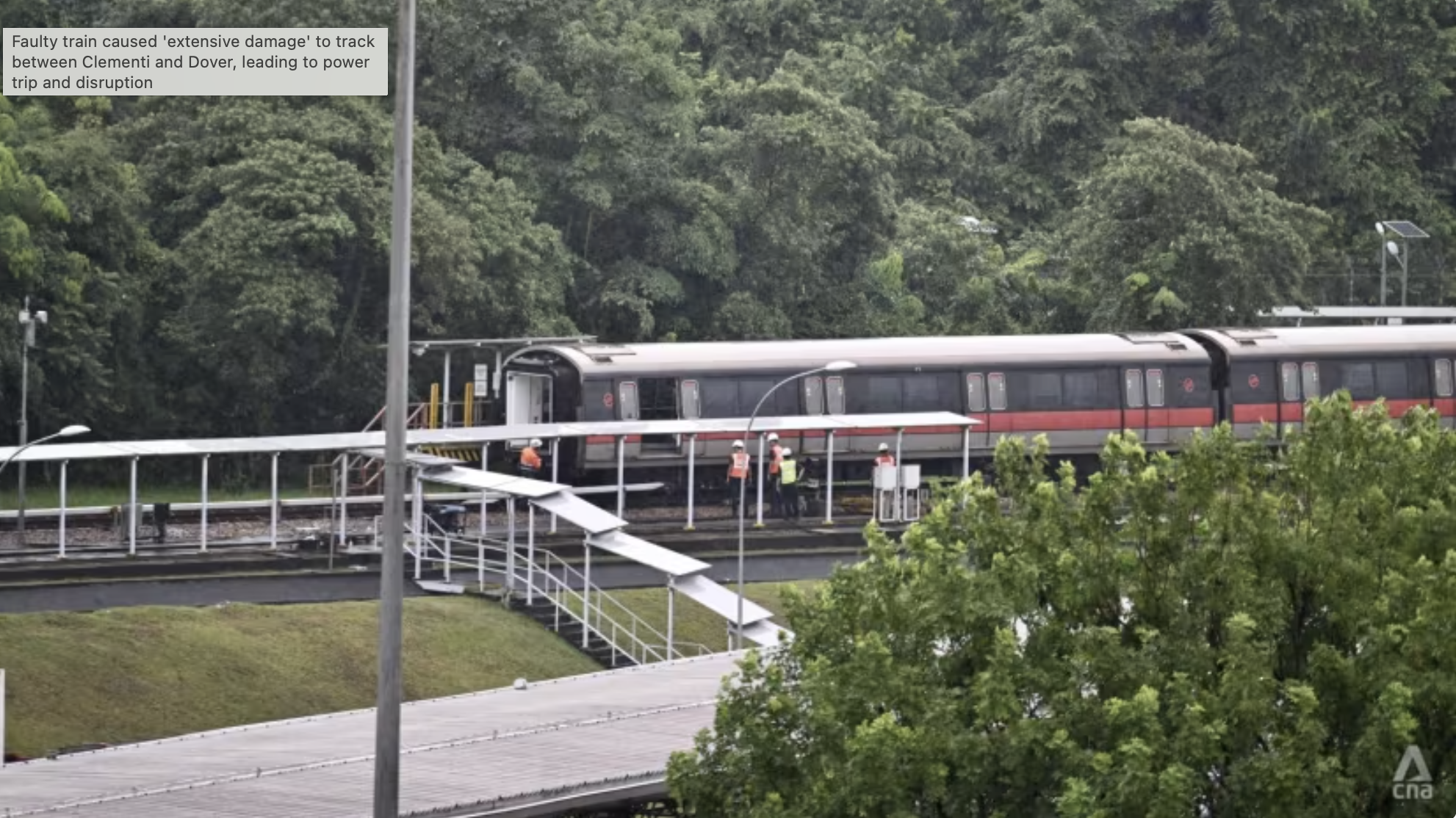
The EW line between Jurong East and Boon Lay MRT stations has been out since Wednesday and service will not be restored till tomorrow nearly a week later. Even then there will continue to be speed restrictions till at least Thursday. While breakdowns and accidents affecting mass transit systems happen in other global cities, the PAP often use their supposed competence and claims of high levels of investment in infrastructure as a justification for curtailing Singaporeans’ civil and political rights. It’s a long standing cliche that the redeeming virtue of authoritarians is that at least the trains run on time. This dates back to Mussolini, the Italian dictator, who ruled Italy from the 1920s until he was toppled in 1943. Making the trains run on time was frequently cited as the redeeming virtue of Mussolini and also Hitler by British visitors of the period. For the last 30 or 40 years the prevailing refrain from foreign jourrnalists and expats has been how marvellous life in Singapore is because everything works and is gleaming new compared to the supposedly run down state of the infrasture in their home countries. Of course many of these journalists and so-called pundits are on all expenses paid junkets to Singapore courtesy of the PAP Government, something that they fail to disclose, and they would not put up with the living conditions of Singaporeans for even a minute.
Back in 2016 the Government got Temasek to buy out the private shareholders in SMRT after a series of breakdowns culminated in a massive power failure in July 2015. This was after massive disruptions led to the departure of the then female CEO Saw Phaik Hwa, whose appointment was due less to competence or qualifications but rather due to her close friendship with Ho Ching, the CEO of Temasek at the time. Ms Saw’s experience was in retail rather than mass transit or engineering and she was blamed for years of underinvestment in maintenance.
Converting SMRT into a wholly owned state company and assigning ownership of the infrastructure and rolling stock to the Land Transport Authority (LTA) while SMRT moved to an asset light operating model under which it leased the trains and operated the services was supposed to solve the problem of under maintenance. Because SMRT no longer had to pay dividends to private shareholders it was theoretically supposed to remove the constraints which had led the company to skimp on maintenance.
Underinvestment isn’t confined to SMRT. Rather it seems to be a growing problem under the PAP which has been cutting back on investment to generate bigger and bigger current account surpluses with the aim of accumulating ever larger foreign reserves. In a recent blog I pointed out that investment as a percentage of GDP had dropped from 28% in 2013 to only 22% in 2023 while the current account surplus had risen to 37% of GDP.
The latest disruption suggests that nothing has changed at SMRT and that the same problems persist. We need an independent Committee of Inquiry to hold those responsible accountable. Here are some questions I would like to ask the Minister for Transport and the SMRT CEO (and the CEO of Temasek since they are the controlling shareholder):
- The damage to the track was reported as caused by an axle that fell off the train. Why didn’t the train stop automatically when this happened but continued to move for 1.6 km causing extensive damage to the track? Were there no sensors which picked up the fact that the axle had dropped and automatically bring the train to a halt?
- The train is reported as being from Kawasaki Heavy Industries and over 35 years old so dating back to the first opening of the EW line. I understand that it would be approaching the end of its economic life at that stage but that many other metro systems operate trains of that age or older. Why was the problem not picked up during routine maintenance?
- Do LTA bear any responsibility for failing to upgrade the infrastructure or rolling stock frequently enough?
- Before SMRT was taken into full state ownership skimping on maintenance and checks driven by the need to pay dividends was a factor in past disruptions. This was supposed to have been removed by buying out the minority private shareholders. From the limited published financial information SMRT is still making a (marginal) profit after tax. Have financial constraints from parent Temasek been a factor in the latest accident?
- How does SMRT compare with other global metro systems of comparable age and ridership in terms of outages and disruptions?
No doubt there are many more questions that the Government, LTA, Temasek and SMRT need to answer but this is a start. The PAP have always claimed that accountability slows them down, that they can “ownself check ownself” and that not having to answer questions is the basis of their claimed superiority over Western democracies. The latest MRT saga should be proof once again that the PAP need more checks not less and that having the threat of replacement by a new government will, to paraphrase the words of LKY uttered in different circumstances, act as an effective spur in their sides.


 The Ricebowl Singapore (TRS)
answer back